Cómo identificar libros de herbolaria mexicana confiables
Key Summary: Prioritize texts authored by botanists or pharmacologists that cite peer-reviewed research and traditional ethnographic sources. Avoid "miracle cure" claims. A reliable guide balances ancestral Mexican wisdom with scientific validation, providing precise botanical names, dosage warnings, and comprehensive bibliographies to ensure safety and accuracy.
Why Not Every Herbal Book Is Trustworthy
Entering the world of Mexican herbalism is an enriching journey, but not every guide is a safe map. Many publications blend genuine botanical science with romanticized folklore, presenting traditional anecdotes as clinical facts. When a book prioritizes "mysticism" over methodology, the risk to the reader increases significantly.
The danger lies in the details. Inaccurate guides often lead to three critical failures:
- Misidentification: Vague descriptions or poor imagery can lead a user to harvest a toxic look-alike instead of a healing herb.
- Dosage Errors: Without precise measurements or contraindication warnings, a "natural" remedy can easily become a pharmacological hazard.
- Outdated Folklore: Relying on anecdotal myths without verifying current toxicological data can lead to dangerous drug interactions.
"In herbalism, the line between a cure and a toxin is often just a matter of dosage and precise identification."
Credible sourcing is not about dismissing tradition, but about validating it. A trustworthy book must bridge the gap between ancestral wisdom and rigorous botanical standards, ensuring that your path to wellness is paved with safety and scientific integrity.
5-Step Checklist to Vet a Mexican Herbalism Book
Navigating the vast landscape of traditional medicine requires a discerning eye to separate authentic wisdom from dangerous misinformation. To ensure your source is both safe and scientifically grounded, use this rigorous vetting process before diving into any Mexican herbalism text.
- Verify Author Credentials: Look for a blend of formal botanical training and recognized apprenticeship within traditional communities. Beware of "experts" without a verifiable lineage or academic background in ethnobotany.
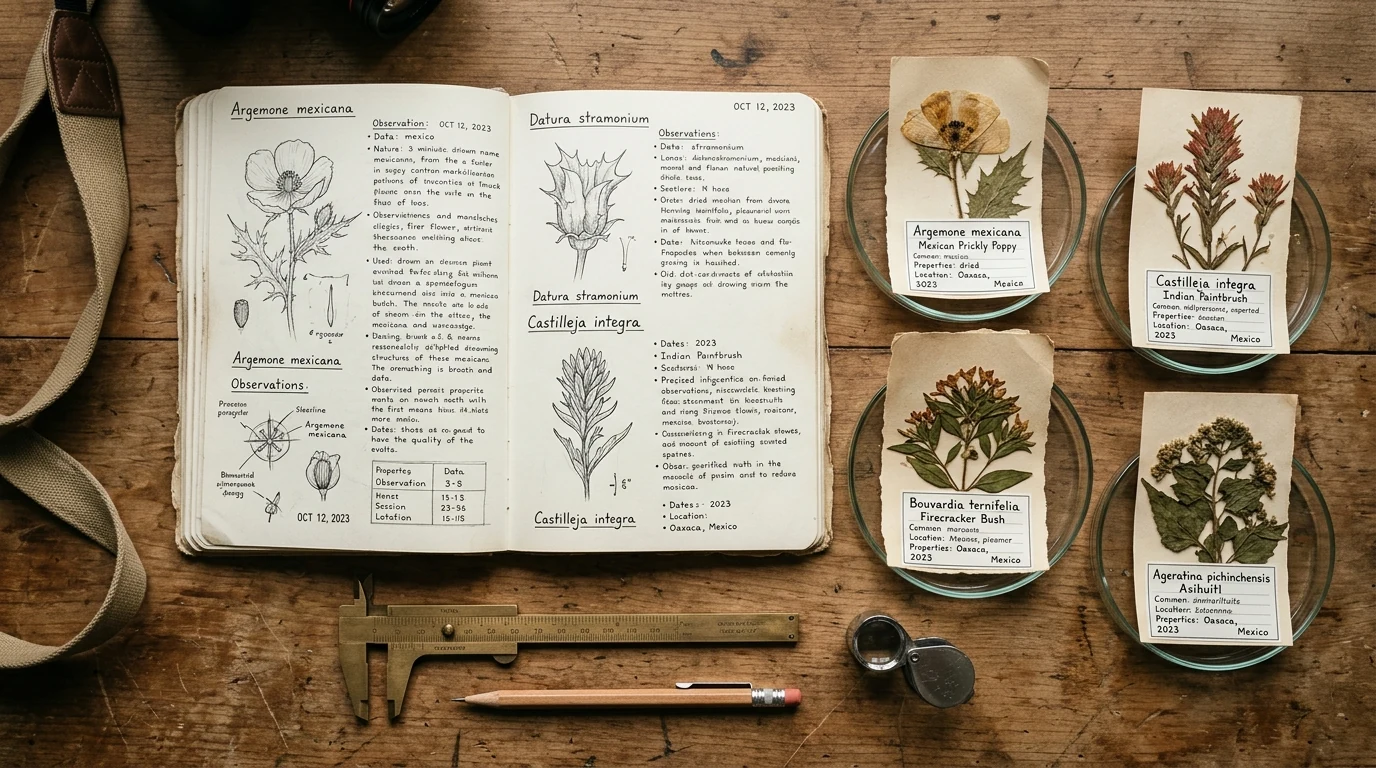
- Check Botanical Nomenclature: Reliable books must list both common names and official Latin binomials (e.g., Tagetes lucida). This prevents lethal mistakes caused by regional naming variations.
- Audit Cited Research: Ensure the text bridges the gap between ancestral knowledge and modern science. Look for citations from peer-reviewed journals or established pharmacopeias.
- Evaluate Safety and Dosage: A trustworthy guide never generalizes. It should provide specific contraindications, precise dosage ranges, and clear warnings regarding toxicity or drug interactions.
- Assess Cultural Context: Authentic herbalism respects its roots. The book should acknowledge the indigenous origins of the practices and avoid "spiritual bypassing" or cultural appropriation.
Pro Tip: If a book promises "miracle cures" without mentioning potential side effects, it is a red flag. True herbalism prioritizes safety over sensationalism.
Recommended Types of Books and Where to Find Them
Navigating the vast landscape of Mexican herbalism requires a strategic approach to literature. To build a reliable library, you must distinguish between different academic and practical formats, as each serves a distinct purpose in your learning journey.
- Field Guides: Ideal for identification; look for those with high-resolution photography and detailed botanical descriptions to avoid toxic look-alikes.
- Ethnobotanical Atlases: These provide essential cultural context, documenting how indigenous communities traditionally utilize specific species.
- Clinical Phytotherapy References: The gold standard for safety, offering pharmacological data, contraindications, and standardized dosages.
- Community Herbal Manuals: Excellent for practical, ancestral wisdom, though they should be cross-referenced with clinical texts for safety.
Pro Tip: To ensure authenticity, prioritize editions published by recognized academic institutions (such as UNAM), botanical gardens, or certified pharmacopeias. Avoid generic "home remedy" booklets that lack cited sources or botanical nomenclature.
For the most reliable editions, explore specialized university libraries, reputable botanical bookstores, or digital archives from recognized Mexican scientific organizations, ensuring the information is peer-reviewed and current.
¿Deseas profundizar en Cómo identificar libros de herbolaria mexicana confiables?
Consulta la selección de libros oficiales, manuales de botica y hierbas auténticas disponibles en Amazon con envío prioritario:
Check Prices and Deals on Amazon ↗Frequently Asked Questions about Mexican Herbalism Books
What makes a Mexican herbalism book scientifically reliable?
It uses precise botanical names (genus and species), cites peer-reviewed or ethnobotanical research, is written by credentialed botanists, ethnobotanists, or clinical herbalists, and includes clear safety, dosage, and contraindication information.
Can I learn traditional Mexican herbalism safely from popular books?
Popular books can be a starting point, but always cross-check plant identities, dosage advice, and contraindications with peer-reviewed sources or a qualified herbalist or pharmacist before use.